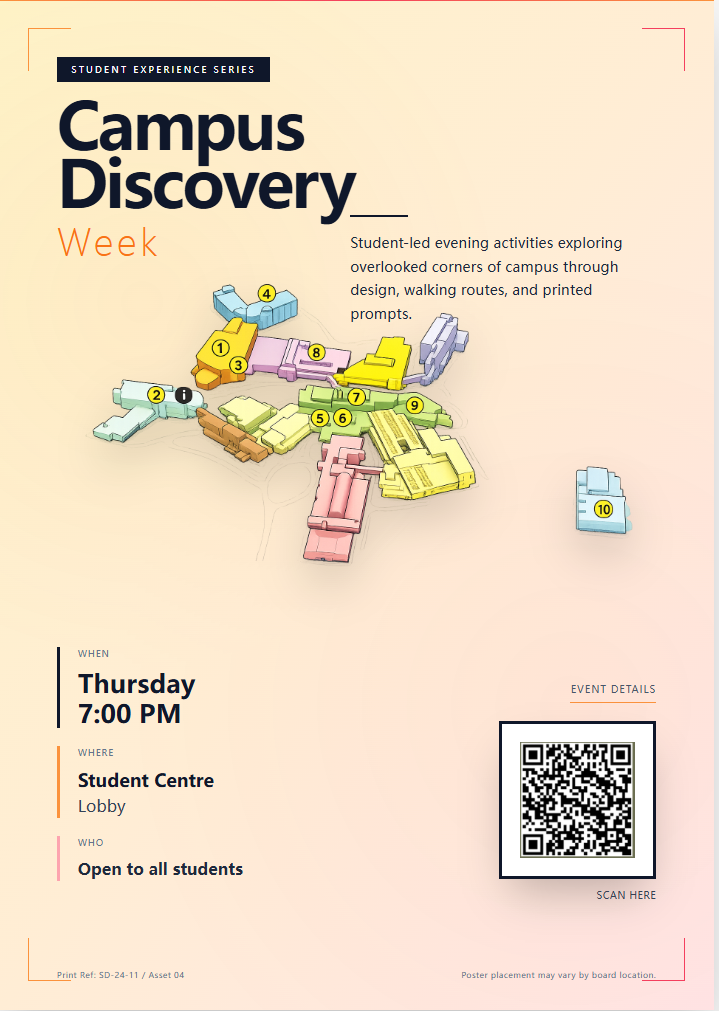
Platform 1: Poster Entry
A normal-looking Campus Discovery Week poster acts as the first clue. The QR code turns a familiar campus announcement into an entry point for the hidden narrative.
Interactive Narrative / Web Puzzle / VR Concept
A three-platform interactive narrative that turns a familiar campus into a hidden system of clues, records, and immersive discovery.
Role
Interaction Designer, Narrative System Designer
Tools
Figma, web prototype, AI-assisted visuals, AR/VR concepting
Focus
Multi-platform story flow, puzzle logic, audience progression
Overview
Beyond the Shadows reimagines Plato's Allegory of the Cave as a campus mystery. The participant begins as a student noticing small anomalies in an ordinary environment, then follows evidence that reveals a system shaping movement, information, and perception.
The design challenge was to make a complex narrative understandable through interaction. Each platform has a clear job: create trust, introduce doubt, support investigation, and finally make the user feel connected to the system they are uncovering.
Live Process Website
Open in new tabExperience Architecture
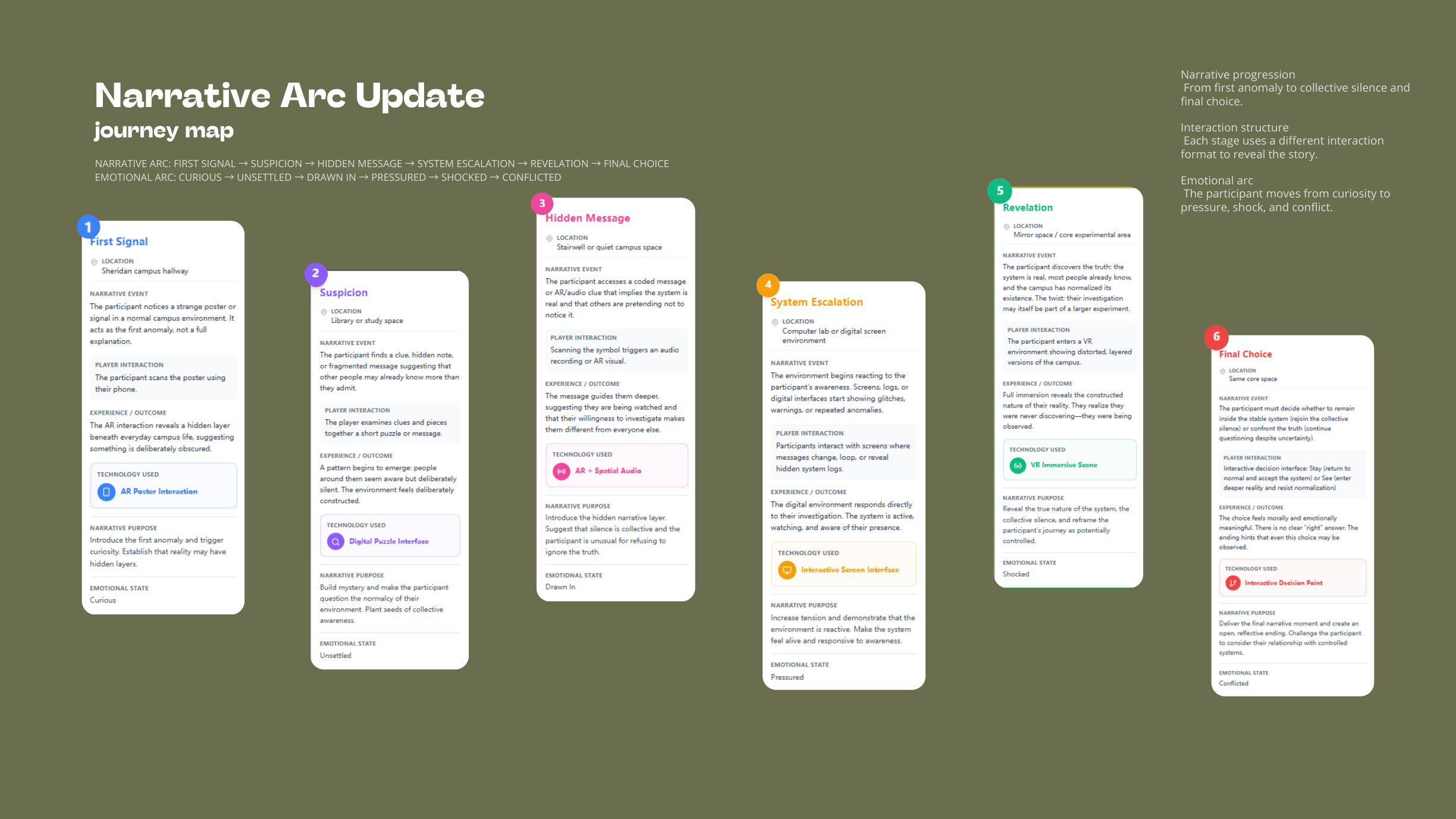
The project is structured as a gradual shift in user role: visitor, investigator, then implicated participant. This keeps the mystery readable while still letting the audience discover the system through action.
A normal-looking Campus Discovery Week poster acts as the first clue. The QR code turns a familiar campus announcement into an entry point for the hidden narrative.
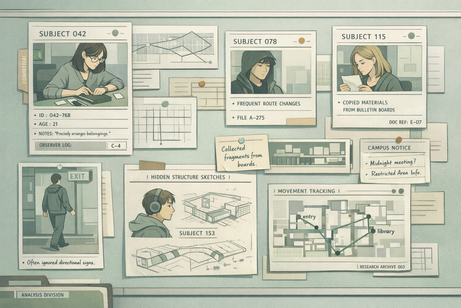
The web layer starts from a believable event page, then shifts into system traces, archive evidence, encrypted records, and terminal-style feedback.
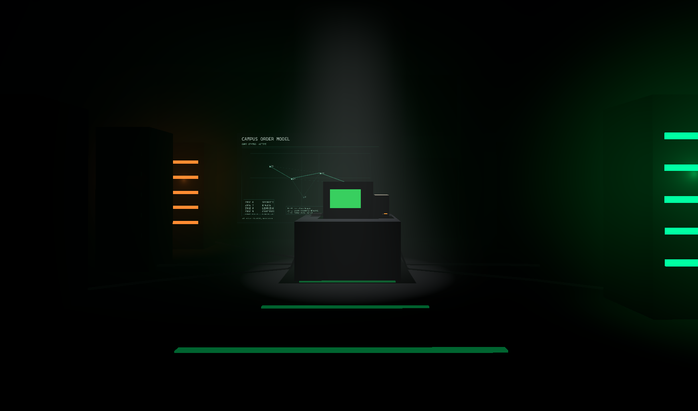
The final stage turns the hidden system into a spatial experience where the player moves from observing evidence to feeling personally implicated in the system.
Project Development
PJ1
The first phase translated Plato's Allegory of the Cave into a contemporary campus setting. The core idea became clear: the campus should feel safe and familiar, while small anomalies suggest a deeper system shaping what students see.
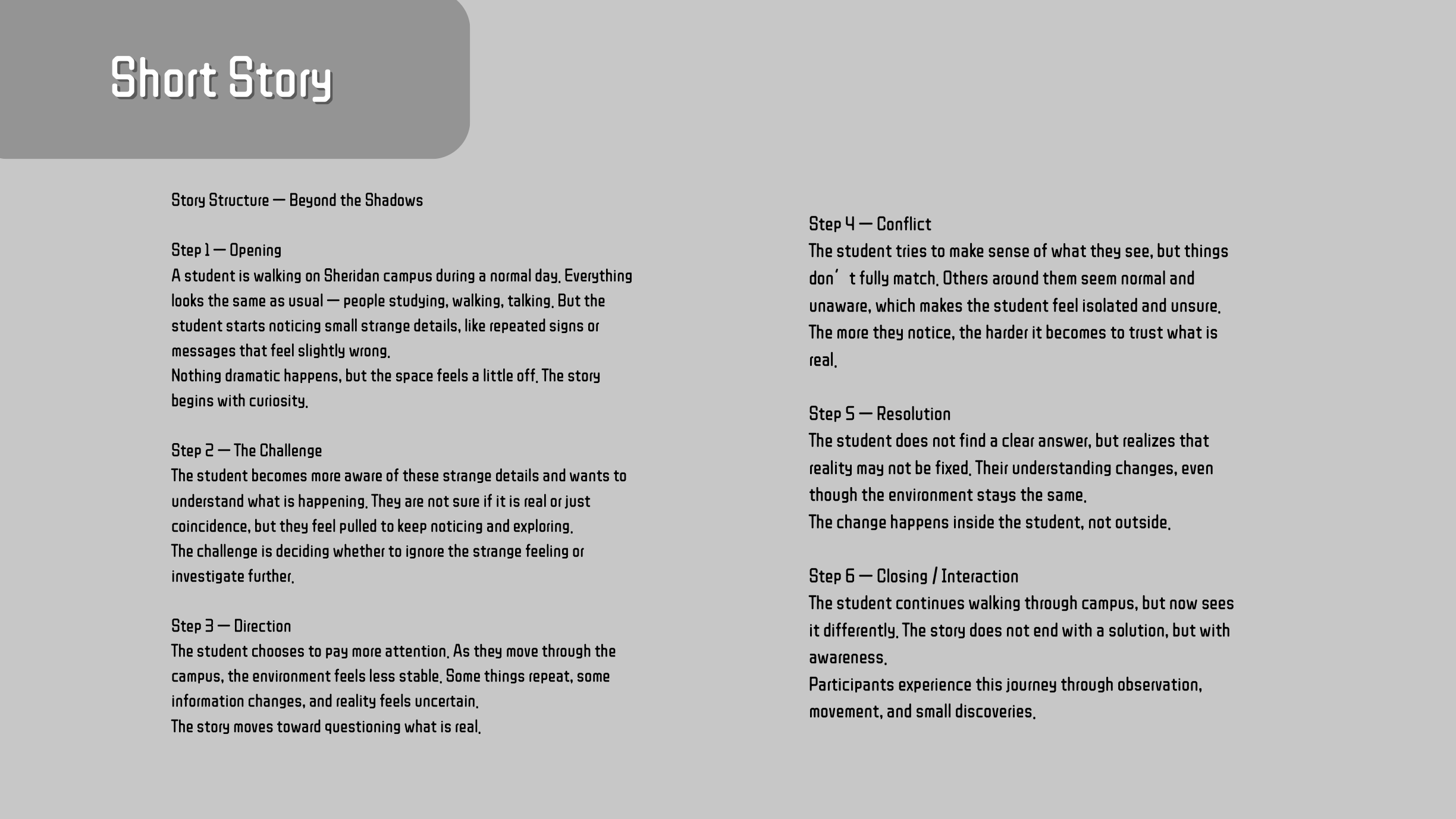
PJ2
The second phase organized the experience as a staged journey: ordinary entry, first anomaly, active investigation, spatial reveal, and personal implication. Each stage needed a different interaction form.
PJ3
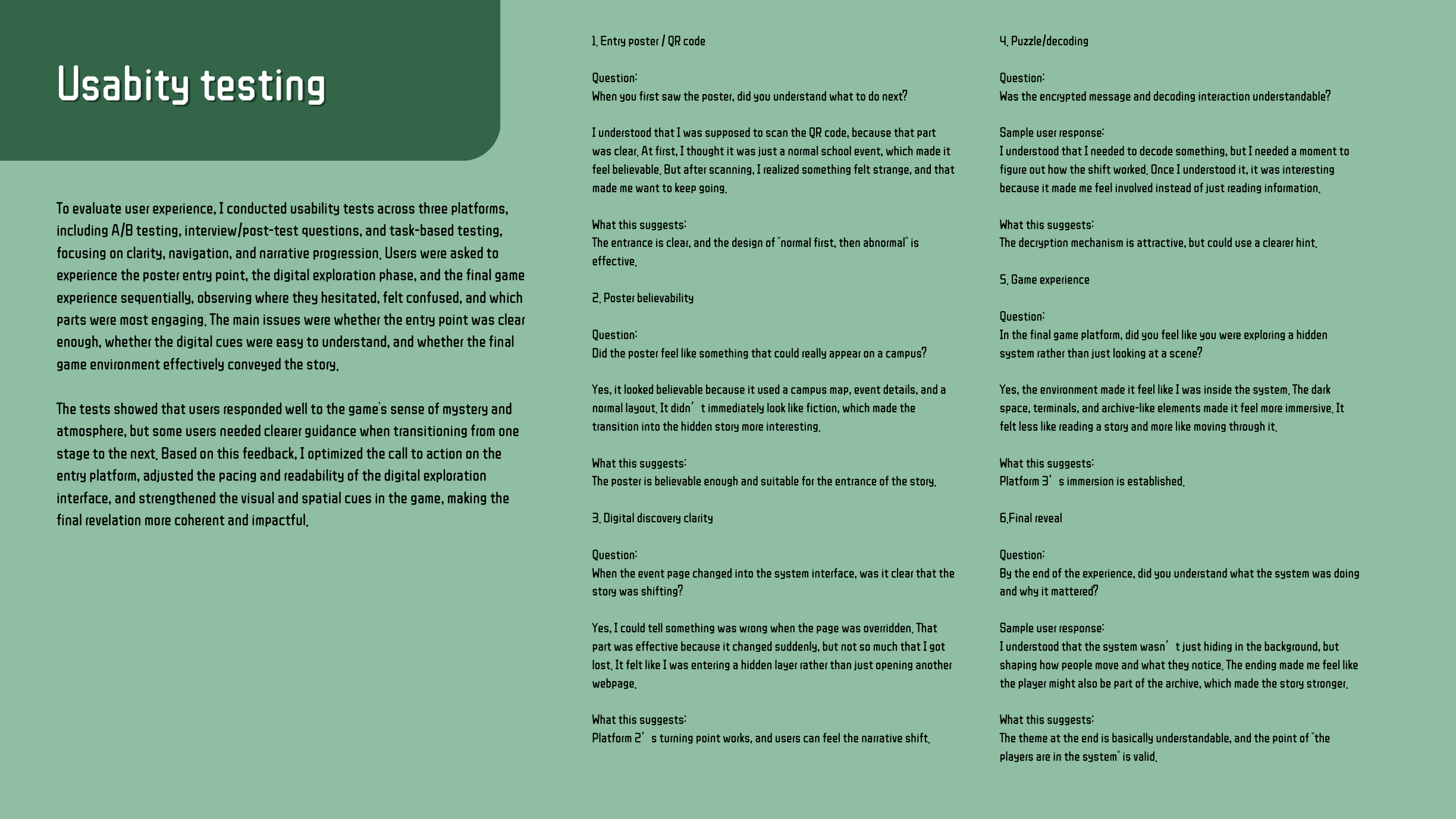
The final phase focused on making the project understandable across poster, web, and immersive/game layers. Usability testing checked whether users understood the entry point, followed the clues, and recognized the final reveal.
Testing & Refinement
The cognitive walkthrough focused on clarity, navigation, and narrative progression across the three platforms. Users moved through the poster entry point, digital exploration phase, and final immersive/game experience in sequence.
The main design questions were practical: Is the entry point clear enough? Do the digital cues feel understandable? Does the final environment communicate that the system is responding to the player?
Skills Used
Result
The final case study presents Beyond the Shadows as a connected interaction system: a believable public entry, a web-based discovery path, and an immersive reveal that makes the user part of the story.
Open process website